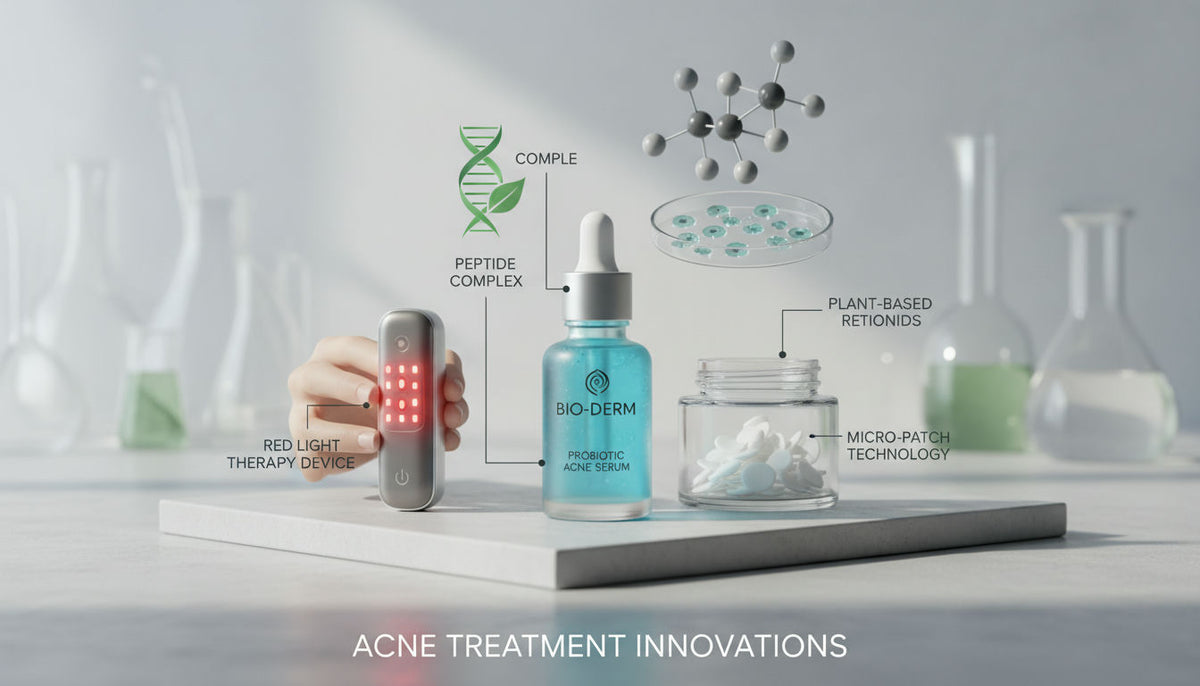
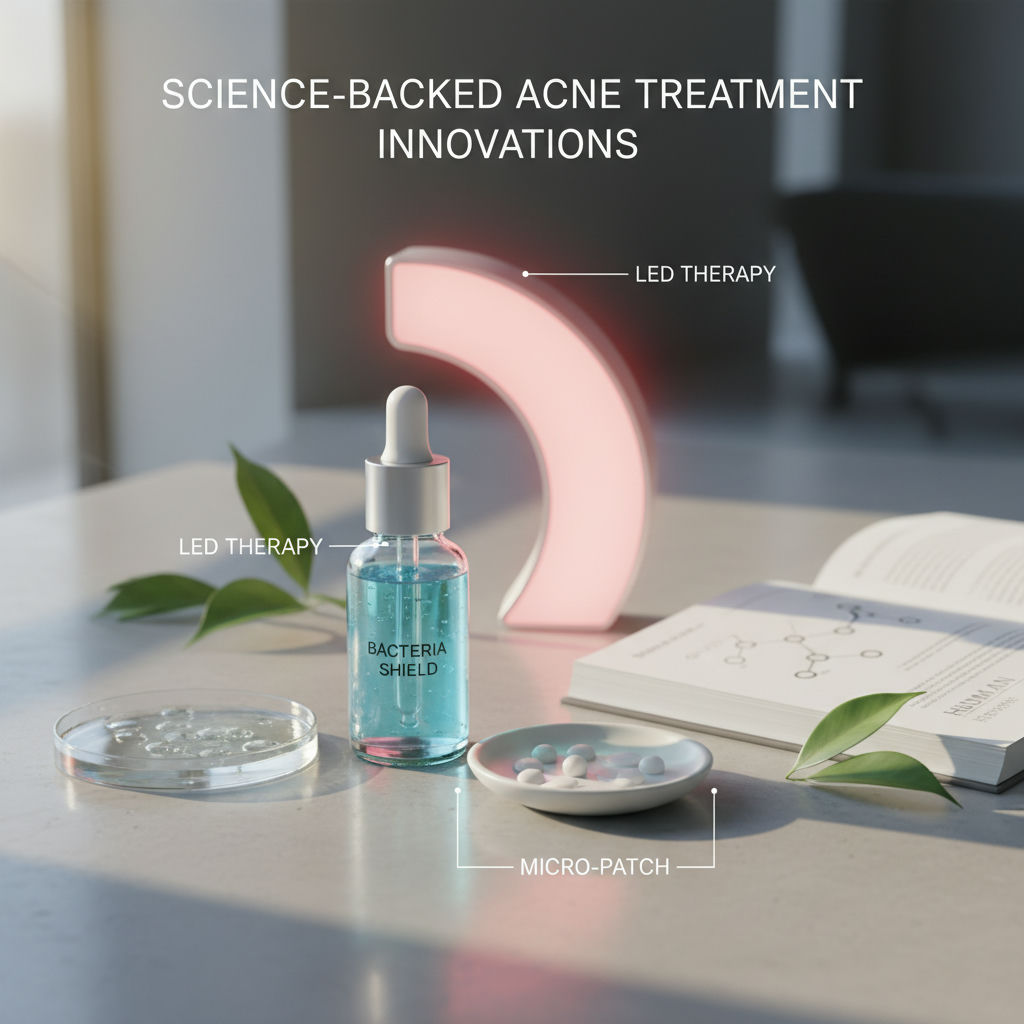
This guide maps current science-backed acne treatment innovations across in-office and at-home tiers. It explains 1726nm sebaceous-gland lasers, bacteriophage therapy targeting C. acnes, and triple-combination prescription topicals, then details hydrocolloid patch technology and barrier-safe advances like postbiotics and encapsulated actives. It compares evidence, access and severity fit, and offers a practical decision path prioritizing barrier preservation.
- AviClear is the first FDA-cleared energy device at 1726 nm targeting sebaceous glands for mild to severe inflammatory acne with 30-minute sessions.
- CABTREO is the FDA-approved fixed-dose triple-combination of clindamycin phosphate, benzoyl peroxide and adapalene, cleared on Oct. 20, 2023 for acne vulgaris.
- Hydrocolloid dressings use carboxymethylcellulose and pectin to absorb exudate, form a gel, keep the wound moist and protect against bacteria and picking.
- Bacterial lysates and other postbiotics contribute to stratum corneum barrier function and help train innate responses to calm acne-related inflammatory cascades.
- Encapsulating tretinoin and benzoyl peroxide separately prevents oxidative degradation, improves stability and allows gradual release that lowers irritation while preserving efficacy.
What Counts as a Science-Backed Acne Treatment Innovation Right Now
Science-backed acne treatment innovations fall into two evidence-grounded tiers: in-office and prescription breakthroughs that are device- and drug-based, and at-home formulation advances you can access without a dermatologist visit. Both target excess sebum production, Cutibacterium acnes activity, and inflammation while preserving the skin barrier instead of stripping it, the opposite of the old drying-out-oil-at-all-costs approach. The rest of this guide maps each tier by mechanism, evidence type, and accessibility, so you can match the innovation to your skin rather than guessing.
For years, routine advice centered on drying out oil at all costs. Current understanding flipped that logic. Acne is driven by four major factors: androgen-dependent sebogenesis, hyperkeratinization, C. acnes colonization, and inflammation, and C. acnes drives comedogenesis in part by producing lipase that converts sebum to free fatty acids. Harsh barrier disruption raises inflammatory signals and makes scarring, post-inflammatory marks, and rebound oiliness more likely. The modern shift is toward precision: lower the trigger, calm the immune response, and keep the barrier intact so skin can heal faster and look clearer, faster.
That precision shows up differently by tier. On the professional side, you will see sebaceous-gland-targeting lasers in the 1726nm range, bacteriophage-based approaches aimed at specific C. acnes phylotypes, and fixed-dose triple-combination topicals that combine retinoid, antimicrobial, and anti-inflammatory action in one formula. On the at-home side, innovation looks like hydrocolloid patch technology borrowed from clinical wound care, encapsulated or buffered actives that release more slowly to reduce irritation, and barrier-supportive formulations with postbiotic and microbiome-friendly ingredients. The clearest dividing line in acne innovation is where the treatment happens: a dermatologist's office or your own bathroom counter.
In-Office Breakthroughs: Sebaceous-Gland Lasers, Bacteriophage Therapy, and Triple-Combination Topicals
That professional tier represents one half of the innovation story, the half requiring a clinic visit. Three approaches define the newest prescription and in-office work on acne biology: a laser that targets the sebaceous gland directly, bacteriophage therapy aimed at C. acnes, and a fixed-dose triple-combination topical that folds three mechanisms into one prescription.
1726nm sebaceous-gland-targeting lasers
Sebum overproduction sits at the root of most inflammatory acne. Sebum has a distinct absorption peak around 1726 nm, which lets a laser at that wavelength deliver selective photothermolysis of the sebaceous gland while sparing surrounding water-rich tissue. By partially suppressing gland output, the device reduces the oil that feeds C. acnes and drives follicular inflammation.
The lead example is AviClear by Cutera, the first FDA-cleared energy device designed for long-term treatment of inflammatory acne through this gland-targeting mechanism. Treatments are designed as a series of quick, 30-minute sessions, and clinical work shows current and future breakouts become shorter, less intense, and less frequent after treatment, with clearance continuing to improve in follow-up. It is performed only in a dermatology office, requires a provider evaluation, and is typically paid out-of-pocket with session packages, creating a clear access barrier versus over-the-counter options.
Topical bacteriophage therapy targeting C. acnes
Bacteriophages are viruses that infect specific bacterial strains. For acne, researchers are engineering or screening phages that bind to pathogenic phylotypes of Cutibacterium acnes, inject their genome, and lyse the bacterium from within.
Unlike broad-spectrum topical antibiotics, phages can be highly selective: they leave many commensal skin bacteria intact and do not drive antibiotic resistance in the same way. Early laboratory and small clinical investigations have shown reductions in C. acnes counts and inflammatory lesions with phage-containing formulations, with work focused on stabilizing phages in a topical vehicle and ensuring they persist on oily, acidic skin. This approach remains investigational in the U.S., accessed through clinical trials or specialized dermatology centers, not as a routine prescription.
Fixed-dose triple-combination prescription topicals
Traditional topicals tackle one pathway at a time. The newest prescription innovation merges three into one gel: a retinoid to normalize follicular hyperkeratinization, benzoyl peroxide to kill C. acnes through oxidative free radicals, and a topical antibiotic to inhibit bacterial protein synthesis and dampen inflammation.
IDP-126 (Cabtreo) is the first triple-combination prescription for acne, combining clindamycin phosphate, benzoyl peroxide, and adapalene in a single formulation with an approved age indication; check current prescribing information for the specific cutoff. The rationale is practical as well as biological: one application improves adherence compared with layering three separate products and hits inflammation, bacteria, and keratin plugging at once. Phase 3 trials and subsequent systematic reviews reported greater lesion reduction versus vehicle and component dyads, with expected local irritation as the main tolerability consideration. As a prescription, it requires a dermatologist visit and pharmacy dispensing.
These are professional or prescription interventions best suited for moderate-to-severe, persistent, or treatment-resistant acne, not DIY replacements for at-home care — they require diagnosis, monitoring, and professional dosing.
Across all three, the shift is toward precision: suppressing oil where it is made, removing one bacterium without wiping the microbiome, and combining actives to reduce friction and overtreatment.
Hydrocolloid Patch Technology: The At-Home Innovation Built on Wound-Care Science
Not every innovation requires a prescription or a clinic chair; some of the most useful science has migrated into products you can buy over the counter. Hydrocolloid acne patches adapt clinical wound-care dressings to absorb fluid from surfaced blemishes and keep them sealed while they heal. The dressings emerged from wound care, first used in ostomy and surgical settings where clinicians needed a material that could stay on, absorb exudate, and cause minimal trauma on removal. That lineage matters because acne patches use the same polymer science, not a cosmetic gimmick.
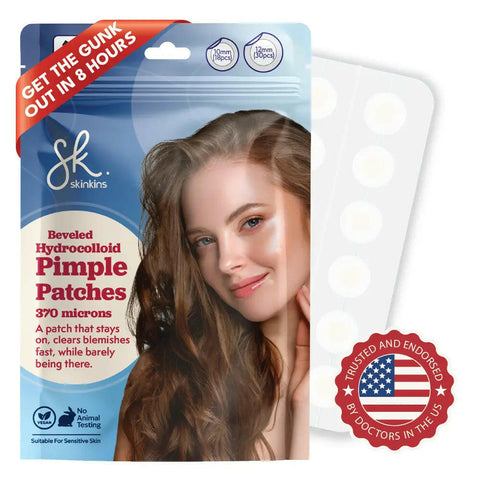
Look Clearer, Faster - Our blemish patches for face work to visibly shrink pimples. A great hydrocolloid patch for faster recovery without irritation.
The mechanism is straightforward. A hydrocolloid dressing consists of gel-forming agents such as carboxymethylcellulose and pectin embedded in an adhesive matrix and backed by a semi-occlusive film. When placed on a blemish that has come to a head, the matrix absorbs sebum and pus, triggering a gel-forming reaction. That gel does two jobs at once: it pulls fluid out of the lesion into the patch, and it maintains a moist healing microenvironment at the skin interface.
Moist wound healing is the core principle borrowed from dermatology. Keeping the wound surface hydrated supports autolytic debridement and cellular regeneration, rather than letting a hard scab form that can slow cell migration and increase scarring risk. Clinical materials describe how this balance retains just enough moisture to promote healing while preventing maceration of surrounding skin, and that a moist environment has been shown to accelerate healing compared to traditional dry dressings.
The second job is protection. Once sealed down, the patch creates a physical barrier against bacteria and against the habit that most damages healing blemishes: picking. Hydrocolloid dressings are selected in both clinical and skincare settings because they conform to contours and protect the affected area from external bacteria and physical irritation caused by touching or picking at the skin. That occlusion is why you see the patch turn white and swell, since fluid has moved into the hydrocolloid.
Within this category, SKIN KINS is one example of how the technology has been refined for face wear. The brand's ultra-thin patches are designed to be virtually invisible under makeup and to absorb impurities and help shrink blemishes in under 8 hours, in line with the wound-care mechanism above. Like all standard hydrocolloid patches, they work best on already-surfaced whiteheads and small pustules where there is fluid to absorb, not on deep, non-surfaced cystic bumps, and they are not a substitute for the in-office procedures used for moderate-to-severe or scarring acne.
When you want a same-day, low-intervention option that leaves the skin barrier alone instead of stripping it, hydrocolloid is the at-home innovation worth understanding. Alongside patch technology, a second wave of at-home innovation is happening at the formulation level, inside the ingredients themselves.
Postbiotics, Encapsulated Actives, and Barrier-Safe Formulation Advances
For years, acne care forced a choice: use strong actives and accept redness, peeling, and a weakened barrier, or protect the barrier and see less clearing. Postbiotics, encapsulated actives, and barrier-safe formulation advances resolve that tradeoff by keeping the barrier intact while targeting inflammation and microbiome imbalance, protecting its ecosystem while controlling how actives are released.
A microcomedone becomes an inflamed papule or cystic lesion when C. acnes overgrowth, excess sebum, and a disrupted microbiome trigger innate immunity. Alterations in microbiome composition, or dysbiosis, contribute to breakdown of the skin barrier as well as immunological activation and inflammation. When barrier lipids and antimicrobial peptides drop, C. acnes lipases and free fatty acids more easily activate Toll-like receptor 2 on keratinocytes, driving IL-1, IL-8, and inflammasome pathways that recruit neutrophils to the follicle.
Postbiotics aim to break that chain without introducing live bacteria, which cosmetics regulations limit. These are non-living lysates, ferments, and filtrates such as Lactococcus ferment lysate, Lactobacillus lysates, and Bifida ferment lysate. Reviews of probiotic constituents note that bacterial lysates support stratum corneum barrier function, and recent systematic reviews describe their role as immune training, where bacterial lysates prime innate and adaptive responses to dampen the exaggerated inflammatory cascades central to acne pathogenesis. In practice, that means less hyper-reactivity to C. acnes, better ceramide synthesis, and a barrier that holds water more effectively, not an attempt to sterilize the skin.
The second advance is how harsh actives are delivered. Traditional benzoyl peroxide and retinoids are effective but chemically reactive and directly irritating to the surface. Microencapsulation solves two problems at once. By encapsulating each component separately to form barriers between each API and between each API and the skin, sol-gel silica shells isolate incompatible molecules, and research on these systems reports that encapsulation protects tretinoin from oxidative degradation by BPO, thereby enhancing stability.
Commercial microencapsulation platforms illustrate the principle for over-the-counter design as well: when applied, the shells act as a barrier that gradually releases actives onto the skin instead of dumping the full dose at contact. The same logic underpins time-release retinol, encapsulated salicylic acid, and buffered benzoyl peroxide in OTC formulas: slow diffusion lowers transepidermal water loss, preserves tight junctions, and lets the active work in the follicle longer.
That is why gentle yet effective is now a formulation outcome, not a contradiction. Barrier preservation keeps inflammation thresholds higher, so skin can tolerate consistent use of proven actives and benefit from microbiome support at the same time.
In-Office vs. At-Home Innovation: Evidence, Access, and Who Each Is For
Cutera secured FDA clearance for AviClear, the first 1726-nm laser system designed to target sebaceous glands for inflammatory acne. Bausch Health secured FDA approval on Oct. 20, 2023 for CABTREO as the first fixed-dose triple-combination topical for acne. Mapped side by side, the real distinction between these innovations is fit, not a simple hierarchy of better versus worse.
The table below puts the full spectrum covered in this article into one view. Mechanism target shows what each approach is designed to act on, evidence type shows how that approach has been validated, and access point and severity help match innovation to real-world use.
| Innovation | Mechanism Target | Evidence Type | Access Point | Best-Fit Severity |
|---|---|---|---|---|
| Sebaceous-gland-targeting laser (1726-nm, e.g., AviClear) | Sebum suppression via sebaceous gland | FDA-cleared device trials | Dermatologist / in-office procedure | Mild to severe inflammatory acne |
| Bacteriophage therapy | C. acnes targeting via phage | Investigational; early clinical/preclinical research | Clinical trial / investigational | Moderate to severe (future use) |
| Triple-combination topical (clindamycin phosphate / adapalene / benzoyl peroxide) | Bacteria + abnormal keratinization + inflammation | Phase 3 randomized placebo-controlled trials | Prescription / dermatologist | Moderate to severe acne vulgaris |
| Hydrocolloid patches | Wound-healing occlusion; absorbs exudate; blocks picking | Wound-care precedent + formulation science | Over-the-counter / at-home | Mild blemishes, whiteheads |
| Postbiotic / encapsulated active formulations | Inflammation + microbiome + barrier support | Formulation science + microbiome studies | Over-the-counter / at-home | Mild to moderate; sensitive skin |
How to weigh the options
If your acne is mild or occasional: at-home innovations tend to be the starting point. Hydrocolloid patches are best aligned with surfaced whiteheads or blemishes that have come to a head, where occlusion and absorption support the wound environment and reduce picking. Encapsulated or buffered actives and postbiotic-infused formulas fit daily maintenance, especially if your skin skews sensitive and you have reacted to harsh, barrier-stripping routines in the past.
If your acne is moderate-to-severe, persistent, or cystic: in-office and prescription innovations carry the clinical-trial evidence base for that severity. The 1726-nm sebaceous-gland laser is performed by a dermatologist and is cleared across mild to severe inflammatory acne, while the fixed-dose triple-combination topical combines antibiotic, retinoid, and antibacterial action in a single prescription regimen studied in Phase 3 trials. Bacteriophage therapy remains investigational and is currently accessible only through research channels.
When combining makes sense: many people use at-home and professional care together rather than choosing one tier. For example, following a dermatologist-prescribed regimen for overall control while using hydrocolloid patches as same-day spot management for individual surfaced lesions keeps daily care consistent and protects healing blemishes from picking-related damage. If breakouts are painful, deeply cystic, scarring, or not responding after 8 to 12 weeks of consistent care, that is the point to bring both tracks to a dermatologist for a tailored plan.
Choosing the Right Innovation for Your Skin: A Practical Decision Path
Choosing the right science-backed acne treatment starts with the clinician's core question, "What is driving this lesion right now?", and answering it with the lowest-barrier tool that targets that driver. All five innovation types matter less in the abstract than in how a reader actually chooses between them on a given day.
Use this quick branching path to match situation to tier:
Surface whitehead or blemish with visible fluid, and you need to protect it today: Cleanse, then apply a hydrocolloid patch. It stays on for hours, absorbs exudate, keeps the area moist, and physically blocks picking so you look clearer, faster without added trauma.
Clusters of red, inflammatory papules or painful, deep, under-skin bumps that keep returning: If consistent OTC care has not helped after several weeks, book a dermatologist visit. This pattern often needs prescription or device-level options that target sebum output or resistant Cutibacterium acnes directly, which at-home products are not designed to replace.
Reactive, easily irritated, or barrier-compromised skin that flares with every new active: Prioritize barrier-safe formulation advances first. Look for encapsulated or buffered actives and postbiotic-infused support formulas that deliver efficacy with less irritation, then re-evaluate before moving to stronger actives.
Realistic timelines help you stay on track. Same-day protection works for surfaced spots. Anything inflammatory needs consistent daily care over several weeks to show a change, not constant product switching. If lesions are cystic, severely painful, leaving scars, or worsening despite steady at-home care, follow established guidance on when to see a dermatologist rather than stacking more OTC products.
The real shift across the last few years is not a single miracle device or ingredient. It is the move away from harsh, stripping routines toward precision and barrier preservation at every price point, from lab-born lasers and targeted bacteriophage research in the office to hydrocolloid plus smarter encapsulation at home. Choose by root cause, protect the barrier while you treat, and escalate deliberately.
If a blemish persists beyond several weeks of consistent at-home care or is cystic and painful, escalate to a dermatologist rather than layering more OTC products.
Sources
- Updated Treatment for Acne: Targeted Therapy Based on Pathogenesis
- AviClear
- pubmed.ncbi.nlm.nih.gov
- www.hcplive.com
- Hydrocolloid dressing
- Applications of Probiotic Constituents in Cosmetics
- www.jpad.com.pk
- link.springer.com
- www.sciencedirect.com
- www.twyneo.com
- www.jaad.org
- FDA Approves Cabtreo<sup>TM</sup> (clindamycin phosphate, adapalene and benzoyl peroxide) Topical Gel For The Treatment Of Acne Vulgaris In Patients Twelve Years Of Age And Older
Frequently Asked Questions
Can I get the 1726 nm laser if my acne is mild or mostly hormonal adult breakouts?
Yes, AviClear is cleared as the first FDA-cleared energy device for mild to severe inflammatory acne, not only severe cases. It targets sebaceous glands directly, so excess sebum is the driver regardless of hormonal timing, but you still need an in-office evaluation and a series of 30-minute treatment sessions.
Do hydrocolloid patches work on deep, painful cysts that have not come to a head?
Standard hydrocolloid works best on surfaced whiteheads and small pustules where there is fluid to absorb. The dressing absorbs exudate and maintains a moist healing environment, but it cannot drain a deep, non-surfaced cyst and should not replace professional care for painful or scarring lesions.
Can I use a hydrocolloid patch while I am on Cabtreo triple-combination gel?
You can use them at different times and on different lesions. Apply Cabtreo as your all-over prescription control for bacteria, keratinization and inflammation, and reserve hydrocolloid dressings for already-surfaced spots as same-day protection that blocks picking. Avoid placing a patch directly over freshly applied prescription to prevent excess occlusion.
Is bacteriophage therapy for acne available at dermatology offices yet?
No, phage therapy targeting Cutibacterium acnes remains investigational in the U.S. Early lab and small clinical work shows selective reduction of pathogenic phylotypes without broad antibiotic effects, but access is currently through clinical trials or specialized research centers, not routine prescription.
Does the clindamycin in the triple-combination raise antibiotic resistance risk?
The fixed-dose gel combines clindamycin phosphate, benzoyl peroxide, and adapalene in one application, and benzoyl peroxide helps reduce resistance pressure by killing bacteria through oxidative action rather than antibiotic activity alone. Still follow your dermatologist's duration guidance and do not layer additional topical antibiotics on your own.
Are postbiotic lysates live probiotics that could worsen breakouts?
Postbiotics are non-living lysates, ferments and filtrates, not live bacteria, so they do not colonize skin. Reviews note bacterial lysates contribute to stratum corneum barrier function and help prime innate responses to dampen exaggerated inflammatory cascades central to acne pathogenesis, which supports barrier and tolerance.
Why put benzoyl peroxide and tretinoin together if they deactivate each other?
Traditional mixing leads to breakdown, but microencapsulation creates separate barriers between each API and between each API and the skin. Research shows this protects tretinoin from oxidative degradation by BPO, and the shells gradually release both actives to improve stability while lowering direct irritation.
When should I see a dermatologist if my acne is not severe?
Guidance from the American Academy of Dermatology notes many people with acne can benefit from seeing a dermatologist and you do not have to have severe acne. Consider a visit if breakouts are persistent, painful, cystic, scarring, or not improving after 8 to 12 weeks of consistent at-home care.