This guide frames a skincare product for acne-prone skin as cleanser, one leave-on active, moisturizer plus SPF, and optional hydrocolloid patches. It explains benzoyl peroxide, salicylic acid, adapalene, azelaic acid and niacinamide by action and irritation risk, matches them to sensitivity and acne type, compares leave-on actives versus patches, and shows how to layer, track 8 to 12 weeks, and know when to see a dermatologist.
- A complete acne prone routine needs only four parts: gentle cleanser, one proven active like salicylic acid or benzoyl peroxide, oil free moisturizer with SPF, and hydrocolloid patches for surfaced blemishes.
- Benzoyl peroxide OTC ranges from 2.5% to 10%, salicylic acid from 0.5% to 2%, adapalene is 0.1% and azelaic acid is 10% in nonprescription options.
- Hydrocolloid patches absorb oil, pus and fluid and create a protective, moist sealed covering that speeds healing and prevents picking, unlike leave on actives that work inside the pore.
- Apply acne medication right after cleansing, then moisturizer and sunscreen, and judge results after 8 to 12 weeks of consistent use, with early improvement often around week 6.
- Stop layering more over the counter products if painful cysts, scarring, or no improvement after three months occur, and seek care from a primary doctor or dermatologist instead.
The Skincare Products That Actually Work for Acne-Prone Skin
The right skincare product for acne-prone skin is actually a four-part system: a gentle, non-comedogenic cleanser, one proven leave-on active such as salicylic acid/BHA, benzoyl peroxide, adapalene/retinoid, azelaic acid, or niacinamide, an oil-free moisturizer plus daily broad-spectrum SPF, and optional hydrocolloid spot patches for individual blemishes. Which active helps you clear faster with less irritation depends on your sensitivity level and your acne type (inflammatory red papules, comedonal blackheads and whiteheads, or deeper cystic lesions), not on brand hype.
Dermatology guidance backs up the timeline, too. Guidance from the American Academy of Dermatology points to a visible improvement window for patients following a plan that includes cleanser, acne medication, and an acne-friendly moisturizer, which is why consistency beats constant switching.
That is the filter this guide uses. Instead of ranking bottles, we sort products by what they do:
- Cleanser: removes oil and debris without stripping the barrier
- Leave-on active: targets the specific acne driver, whether bacteria, clogged pores, excess oil, inflammation, or cell turnover
- Moisturizer + SPF: protects barrier function and prevents UV-triggered dark spots, especially important when using actives
- Spot patch: isolates a surfacing blemish so you leave it alone and let it flatten
You do not need all actives at once. For sensitive or reactive skin, one well-tolerated active plus basic care often outperforms a crowded routine. For oily, resilient skin, you may tolerate stronger combinations, but still one new product at a time so you can spot what irritates.
The rest of this guide shows you how to match each ingredient to sensitivity and acne presentation, and how to decide between leave-on treatments and hands-off patches, starting with what each ingredient category is actually doing to the skin.
Core Ingredients for Acne-Prone Skin: What Each One Actually Does
Five ingredients do most of the work for acne-prone skin: benzoyl peroxide, salicylic acid, adapalene, azelaic acid, and niacinamide. You do not need all five at once. Each has a different job, a different irritation profile, and a different best-fit skin type.
1. Benzoyl peroxide — antibacterial and fast-acting
Benzoyl peroxide kills bacteria that cause acne, helps remove excess oil and removes dead skin cells that clog pores. It is best for inflamed red papules and pustules, especially in oily, resilient skin that can tolerate drying.
Nonprescription options are sold in strengths from 2.5% to 10%, and studies show lower strength can be as effective as higher strength. Irritation risk is higher than most other actives: dryness, scaling, burning and stinging are common, especially for sensitive skin, plus it can bleach towels and hair. If you are reactive, start with a 2.5% water-based formula a few nights a week and pair with moisturizer. Avoid on broken or eczema-prone areas.
2. Salicylic acid (BHA) — pore-clearing exfoliant
Salicylic acid is lipophilic, so it gets into oil-filled pores to loosen the plug and help prevent new breakouts. It suits comedonal acne (blackheads and whiteheads on the nose, chin, and forehead) and generally irritates less than benzoyl peroxide.
It is available over the counter from 0.5% to 2% in cleansers and leave-on products. Possible downsides are mild stinging, dryness, and temporary discoloration on deeper skin tones. People with aspirin allergy or very dry, compromised barriers should start low or skip.
3. Adapalene and other retinoids — cell-turnover regulators
Retinoids like adapalene help unclog pores and prevent new comedones by normalizing how skin cells shed inside the follicle. Dermatology guidelines list topical retinoids among the mainstay therapies for acne, particularly for persistent or recurrent acne that keeps forming in the same areas.
Adapalene 0.1% gel is available without prescription. Expect dryness, scaling, and some inflamed skin early on, plus sun sensitivity. The classic way to lower irritation is to use a pea-sized amount 2 to 3 nights per week, moisturize first, and avoid application to cuts, sunburn, or eczema patches. If you are highly reactive, pregnant, or using multiple other actives, talk to a clinician before starting.
4. Azelaic acid — anti-inflammatory and brightening
Azelaic acid prevents pores from plugging, is mildly antibacterial, and calms inflammation while helping fade dark spots left after acne. Nonprescription products come in 10% strength, with prescription options higher.
It is often described as a topical comedolytic, antibacterial, and anti-inflammatory agent that may be particularly helpful for patients with sensitive skin or those prone to post-inflammatory hyperpigmentation. Irritation is usually low, making it a good entry point if benzoyl peroxide or retinoids sting too much.
5. Niacinamide — barrier-supportive calming
Niacinamide is vitamin B3. It does not kill bacteria directly but supports barrier function, reduces the look of redness, and helps regulate oil. For acne-prone skin that is also sensitive or easily dehydrated, it is useful as a daily calming ingredient alongside one targeted active, rather than as a standalone acne treatment. Irritation risk is low, and it layers well with most other ingredients.
Choosing by Skin Sensitivity and Acne Type: A Decision Framework
Choosing a skincare product for acne-prone skin forces a tradeoff between clearing power and barrier tolerance, so the right choice depends on matching your sensitivity level and acne type to a specific ingredient category, concentration, and starting frequency.
Knowing which active fits a given skin type still leaves one major category unaddressed: what to do about an active breakout without using an active ingredient at all. Use the framework below first, then add a non-active option for the days a spot is already surfaced.
Branch by sensitivity
For skin that's highly reactive, redness-prone, or stings easily, start with the gentlest categories and the lowest strength available. That usually means niacinamide daily and azelaic acid on alternate nights to start. Introduce only one new product at a time and keep leave-on exfoliants and retinoids to a few times per week initially, then increase only if no burning, peeling, or prolonged redness occurs. Avoid layering multiple strong actives in the same routine.
Resilient, oily skin that's rarely irritated can tolerate leave-on BHA or benzoyl peroxide more often from the start, but still begin with a low concentration and short contact. For example, BHA a few evenings per week and benzoyl peroxide as a targeted leave-on, not all over, then adjust to daily use only if your barrier stays calm.
Branch by acne presentation
For occasional whiteheads and blackheads, focus on steady, low-maintenance prevention. A gentle cleanser, one well-tolerated active from above, moisturizer, and SPF is enough. Resist adding a second active until you have two weeks of no irritation.
Persistent inflammatory papules and pustules call for picking one primary active and staying consistent. If you are sensitive, azelaic acid or niacinamide as the mainstay; if resilient, BHA or low-strength benzoyl peroxide. Increase frequency gradually rather than adding more products.
Deep, painful nodules or cysts under the skin are a different pattern entirely, and this needs medical input, not stronger self-treatment.
When to escalate to a dermatologist
Mayo Clinic guidance notes that if self-care remedies don't clear your acne, see your primary care doctor, and if acne persists or is severe, seek a dermatologist. Signs that warrant that step include cystic lesions, nodules that leave pits or thick scars, rapid spread across chest and back, signs of infection such as marked swelling, fever or draining, or acne that worsens after months of consistent over-the-counter care. The AAD's advice on when to see a dermatologist reinforces that many people with acne benefit from professional evaluation rather than layering more products.
Warning: persistent cystic, nodular, or scarring acne warrants a dermatologist visit, not more over-the-counter layering.
That's where a very different product category (the spot patch) earns its place in the routine.
Hydrocolloid Patches vs. Leave-On Actives: SKIN KINS and the Spot-Treatment Category
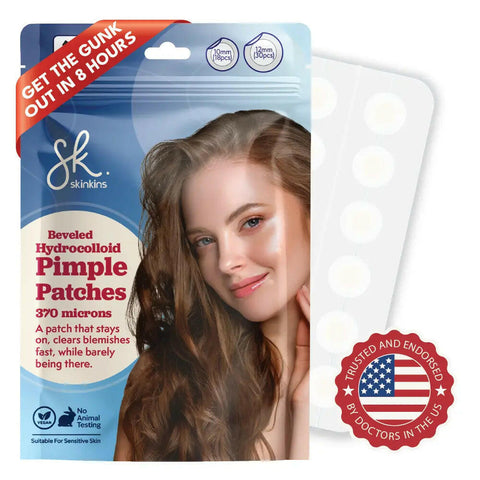
Hydrocolloid spot patches and leave-on actives are two separate categories for acne-prone skin: one drains and protects the spot you can see, the other treats the chemistry that created it. SKIN KINS builds ultra-thin hydrocolloid pimple patches to absorb fluid from a surfaced whitehead and seal it from fingers and friction, a different job from leave-on actives that work inside the pore.
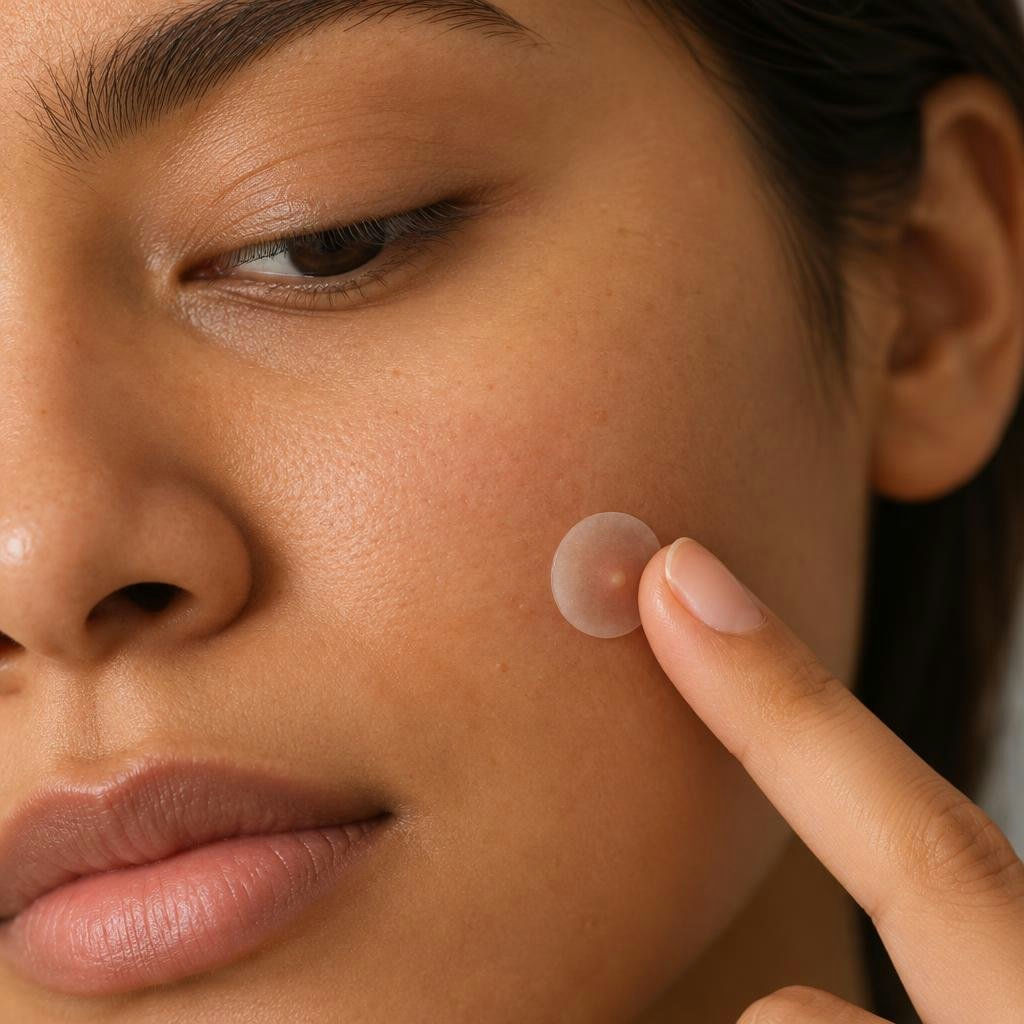
Look Clearer, Faster - Our blemish patches for face work to visibly shrink pimples. A great hydrocolloid patch for faster recovery without irritation.
A hydrocolloid patch uses the same gel-forming material found in medical wound dressings. When pressed onto a moist or open blemish, that layer absorbs excess oil, pus and fluid while creating a protective covering over the skin and holds it as a white gel inside the patch. It also keeps the wound moist and sealed, which helps skin cells repair more efficiently and reduces scarring, and it acts as a physical barrier that prevents touching or picking. Wear time varies by product, which is why checking the label for recommended overnight or all-day use matters before you commit to a patch.
That is fundamentally different from BHA, benzoyl peroxide or retinoids, which need direct contact with the pore to exfoliate, kill bacteria or normalize shedding. Plain hydrocolloid does not do any of that. In practice, both plain and medicated patches share the same gel base, so both absorb fluid and protect the spot; a medicated version simply adds a low-dose active on top.
For sensitive or reactive skin, that difference matters. A plain, unmedicated hydrocolloid is the lower-risk default. SKIN KINS focuses on ultra-thin patches designed for sensitive skin and discreet wear under makeup, so the patch itself does not add irritation from an active under occlusion. If you want help preventing scars after the spot flattens, keeping the area moist and untouched supports healing, as outlined in this guide to how to heal acne scars naturally.
| Criterion | Leave-on actives (BHA/retinoid/benzoyl peroxide) | Hydrocolloid spot patches |
|---|---|---|
| Mechanism | Acts in pore or on bacteria — exfoliates, antibacterial, normalizes shedding | Absorbs fluid and pus, creates protective seal; no pore-clearing action |
| Best target | Early congested bumps, blackheads, widespread comedones | Surfaced whiteheads or oozing spots, often after squeezing |
| Visible change | Hours to days of consistent daily use | Flattening as fluid is drawn into patch |
| Irritation risk (sensitive skin) | Higher — acids and benzoyl peroxide dry, sting, peel | Very low for plain hydrocolloid; higher with salicylic acid |
| Makeup compatibility | Can pill under makeup; layering adds sensitivity | Ultra-thin hydrocolloid can sit under makeup |
| Picking protection | None — skin stays exposed | Built-in barrier against fingers, bacteria, friction |
Use the table to match the tool to the moment: reach for a leave-on active when congestion is early or widespread, and reach for hydrocolloid when a whitehead has surfaced or been squeezed and you need hands-off, low-irritation drying without adding another active to an already sensitized area.
Building a Routine Without Over-Treating Your Skin
What order should acne-prone skin actually layer products to avoid irritation? Cleanse, then apply one leave-on active right after cleansing, then moisturizer, then sunscreen in the morning, keeping the rest of the routine simple. Dermatologists recommend that you apply products in the following order: wash your face, apply medication or treatment right after cleansing, then moisturizer and/or sunscreen. That sequence matters for acne-prone skin because it puts the active where it can work and uses moisturizer to buffer potential dryness instead of adding another active on top.
Start with one active only. Introduce a single new leave-on treatment, use it at the labeled frequency for several weeks, and track response before adding anything else. Most over-the-counter acne treatments need three months of consistent use before you can fairly judge results, which is why switching every few days looks like failure when it is really impatience plus irritation.
Build day and night around that rule:
- Morning: gentle cleanser, moisturizer, broad-spectrum sunscreen. If your chosen active is benzoyl peroxide or salicylic acid, you can use it in the morning, but keep it to one.
- Evening: cleanser, one active such as adapalene or azelaic acid, moisturizer. If you use a retinoid at night, skip other exfoliating acids that night.
- Spot patches: use them on a clean, dry, open or surfacing lesion. Apply the patch directly to that spot and keep your leave-on active off that specific spot while the patch is on. The rest of the face keeps the regular moisturizer routine, so you are not compounding irritation.
Common over-treating mistakes break the barrier and make acne look worse: washing more than twice daily or with a scrub, layering BHA plus AHA in the same routine, and applying benzoyl peroxide and a retinoid to the same areas at the same time without any buffering or alternation. If stinging, tightness, or new redness appears, reduce frequency to every other night and focus on cleanser plus moisturizer plus sunscreen for a few days rather than adding a new soother active.
Use this fill-in template to keep your routine to four steps and one active:
| Step | What to enter | Example |
|---|---|---|
| Morning cleanse | Product name | La Roche-Posay Toleriane Hydrating Gentle Cleanser |
| Morning active | One active or "none" | None - sunscreen and moisturizer only |
| Morning moisturizer | Product name | CeraVe PM Facial Moisturizing Lotion |
| Morning sunscreen | Product name | EltaMD UV Clear Broad-Spectrum SPF 46 |
| Evening cleanse | Product name | Same gentle cleanser as AM |
| Evening active | One active | Adapalene 0.1% gel, pea-sized amount |
| Active frequency | How often | 3 nights per week Mon/Wed/Fri |
| Spot patch use | When and where | Hydrocolloid patch on open whitehead, overnight, no active under patch |
| Start date | Date you started this active | April 28, 2026 |
| Review date | 8-12 weeks later | July 14, 2026 - photo check and irritation check |
When to See a Dermatologist and How to Keep Progress Going
The biggest mistake that keeps acne-prone skin stuck is treating every new breakout as proof your skincare product for acne prone skin failed and swapping actives every few days, so nothing ever gets a fair trial. The real judgment call is whether your routine is actually working after 8 to 12 weeks of consistent use, or whether it is time to get professional help.
When a routine is working, you will see fewer new inflamed bumps, less tenderness, and smoother texture starting around week 6, not overnight clearance. That early shift means clogged pores are clearing faster than they form.
When it is not working, the signs are consistent. If skin is still breaking out after consistent use for 8 to 12 weeks, if you have painful deep nodules or cysts, if lesions leave dents, raised scars, or lingering dark marks, or if acne covers large areas of face, chest or back, that is the point to move past trial and error and book a dermatologist. You do not need to wait until it is severe on paper; impact on confidence and daily life is itself a reason to seek care.
Once you find a routine that holds, protect progress with three habits:
- Patch test any new product on the jawline for 3 to 4 days before full-face use, even if it claims to be for sensitive skin.
- After a break from actives, reintroduce slowly, every other night, before returning to nightly use, to let the barrier readjust.
- Do not stack a hydrocolloid patch and a leave-on acid, benzoyl peroxide, or retinoid on the exact same spot at the same time; let the patch do the hands-off protection, then resume actives after removal.
Choose the path that trades constant switching for a measured trial, and escalate early when scarring or cystic pain appears. That discipline keeps clear skin gains instead of losing them to irritation and picking.
Sources
- Nonprescription acne treatment: Which products work best?
- reference.medscape.com
- www.jaad.org
- Acne
- Treating acne? Is it time to see a dermatologist?
- How Do Pimple Patches Work? Hydrocolloid Explained
- Salicylic Acid Patches vs Plain Hydrocolloid: Which Do You Need?
- Should I apply my skin care products in a certain order?
- slmdskincare.com
- When Acne Needs a Dermatologist | Goodman Dermatology
- futureclinic.com
Frequently Asked Questions
Can I use benzoyl peroxide and adapalene together at night?
You can but irritation adds up quickly. Start by alternating nights or using benzoyl peroxide in the morning and adapalene 0.1% at night, with moisturizer to buffer dryness. If you see burning, scaling or persistent redness, drop back to one active only.
What strength of salicylic acid should I start with for sensitive skin?
Nonprescription leave-on and wash-off products range from 0.5% to 2%. For sensitive or dry skin, begin at the low end of that range a few evenings per week, then increase only if you have no stinging or peeling.
Are medicated pimple patches better than plain hydrocolloid for whiteheads?
Both plain and medicated patches share the same base, so both absorb fluid and protect the spot; medicated simply adds a low-dose active. Plain hydrocolloid has very low irritation risk and is the default for sensitive skin, while medicated can sting under occlusion.
How long should I test a new acne active before deciding it does not work?
Most over-the-counter routines need 8 to 12 weeks of consistent use before you can judge results, with early signs around week 6. Switching every few days prevents you from seeing that window and often creates irritation that looks like failure.
Can I wear makeup over a hydrocolloid patch and still use my morning acne treatment?
Yes, ultra-thin hydrocolloid is designed to sit under makeup and acts as a physical shield that prevents touching or picking. Apply the patch to clean, dry skin and keep leave-on acids, benzoyl peroxide or retinoid off that exact spot while the patch is on.
Benzoyl peroxide bleaches my towels and stings. What is a gentler alternative for sensitive skin?
Azelaic acid 10% nonprescription is often better tolerated. It is described as a topical comedolytic, antibacterial, and anti-inflammatory agent that may be particularly helpful for patients with sensitive skin and also helps with post-acne dark spots.
What order should I apply cleanser, treatment, moisturizer and sunscreen?
Dermatologists advise to wash your face, apply medication or treatment right after cleansing, then moisturizer and/or sunscreen. That puts the active in direct contact with skin and lets moisturizer buffer dryness instead of diluting efficacy.
When should I stop self-treating and see a dermatologist for acne?
If self-care does not clear acne, see your primary doctor, and if acne persists or is severe, seek a dermatologist as Mayo Clinic guidance suggests. A practical cutoff is three months of consistent OTC use with no improvement, or any painful nodules, deep cysts, scarring or spreading to chest and back.