The article explains how to heal acne scars naturally and fast by first distinguishing flat PIH/PIE marks from atrophic pits and raised hypertrophic scars. It grades evidence for niacinamide, vitamin C, SPF, silicone and barrier care, outlines realistic fading timelines, warns against irritating home remedies and dermarollers, and shows how stopping picking and using protective habits prevents new scarring.
- Flat brown or red post-acne marks are not true scars; true scars change skin texture while hyperpigmentation changes only color.
- Post-inflammatory hyperpigmentation often fades by itself, but it can take months or even years without sun protection and targeted care.
- A double-blind trial found 4% niacinamide for 8 weeks produced good to excellent pigment improvement in 44% of 27 patients studied.
- Atrophic boxcar, rolling, and ice-pick scars rarely go away completely on their own and do not fill from natural topicals alone.
- Picking pimples ruptures the follicle and spills bacteria into skin, increasing risk for permanent pitted scars and dark spots.
How to Heal Acne Scars Naturally and Fast
How to heal acne scars naturally and fast depends on what you actually have: flat post-inflammatory marks and redness can fade naturally over months with diligent sun protection and evidence-backed brightening care, while true textural scars (indented boxcar, rolling, ice-pick or raised hypertrophic scars) rarely go away completely on their own and usually need professional treatment to fully smooth.
Most guides promising fast fixes treat every dark spot or pit as the same problem, so people waste weeks on kitchen remedies that were never meant for their mark. Even flat marks are not overnight. Dermatology references note that post-inflammatory hyperpigmentation often fades by itself, but it can take months or even years to resolve without targeted care, which is why matching the remedy to the scar type matters more than chasing speed.
This guide breaks down how to tell marks from pits from raised scars, which natural and at-home ingredients actually have support for each, and what realistic timelines look like, so you stop guessing and start treating the right issue. Before picking a remedy, you need to know which kind of mark you're actually dealing with.
Identify Your Scar Type First: Marks, Pits, and Raised Scars
Acne scarring divides into three clinical groups that decide if fast natural fading is realistic: flat post-inflammatory hyperpigmentation and erythema (PIH/PIE), atrophic pitted scars (ice-pick, boxcar, rolling), and raised hypertrophic or keloid scars. Color fades on its own clock while texture does not, which is why the next step is figuring out which category your own marks fall into.
The American Academy of Dermatology classifies depressed scars as atrophic scars that sit below the surrounding skin surface and are subdivided into ice-pick, boxcar, and rolling subtypes, separate from raised hypertrophic and keloid scars. Flat red, brown or purple spots left after a breakout are not scars at all under that framework.
1. Flat marks: PIH and PIE
What you see: smooth skin with only color changed. Brown, gray or tan patches are PIH, melanin left behind after inflammation. Red or pink patches that remain for weeks are PIE, dilated capillaries.
How to check:
- Touch test: eyes closed, fingertip across the area. Completely flat means pigment or vascular mark.
- Blanch test: press a clear glass against a red mark. If it disappears under pressure and floods back, it is vascular PIE, not pigment.
- Light test: stand in side light from a window. Color alone casts no shadow.
Natural fading is realistic here, but on a months-long scale, not days.
2. Atrophic pitted scars: ice-pick, boxcar, rolling
What you feel: a dip, edge or crater. Ice-pick is narrow and deep like a puncture, boxcar is wider with sharp walls and a flat floor, rolling is a soft wave with no distinct edge.
How to check: use the touch and stretch tests. A depressed scar gets more obvious when you pull the skin taut, while a flat mark gets less obvious. Only rolling scars typically smooth out under tension because a fibrous band tethers them below. Raking side light makes pits cast shadows.
3. Raised scars: hypertrophic and keloid
What you feel: firm tissue that sits above the surface, most often on chest, back, shoulders and jawline. Hypertrophic stays within the original breakout border; keloid grows beyond it.
How to check: touch catches them immediately as a bump, and stretch does not change them.
Pitted or raised acne scars are structural changes in collagen. They do not fill or flatten with home remedies or over-the-counter creams alone and typically need dermatologist-led procedures for meaningful texture improvement.
Once you know whether you have color, pit or raised tissue, you can match expectations to biology instead of chasing a one-size-fits-all fix.
Evidence-Graded Remedies and Timeline by Scar Type
Flat PIH/PIE marks fade fastest and have the strongest at-home evidence behind them, with clinical data for 4% niacinamide showing good to excellent improvement in 44% of patients after 8 weeks of consistent use alongside daily SPF.
PIH/PIE marks (flat brown, red, or purple spots)
These are pigment and vascular leftovers, not true pitted scars, so topicals have the strongest evidence here. The most studied options:
- Niacinamide 4% to 5%: Blocks melanosome transfer from melanocytes to keratinocytes. In a double-blind randomized trial, 27 melasma patients applied 4% niacinamide for 8 weeks with pigment improvement on that side, and 44% were rated good to excellent. A separate RCT found that 5% niacinamide produced visible improvement in hyperpigmented spots with continued use, a second line of clinical-trial support beyond the melasma data.
- Vitamin C and azelaic acid: Vitamin C inhibits tyrosinase and scavenges UV-triggered free radicals; azelaic acid normalizes keratinization and pigment. Evidence is moderate-to-strong from dermatology RCTs, well beyond kitchen remedies.
- Centella asiatica / cica and licorice root extract: Centella supports barrier repair and soothes PIE redness; licorice root (glabridin) inhibits tyrosinase. Evidence is emerging (small clinical studies and in-vitro data), promising but not as strong as niacinamide.
- Daily SPF as part of the routine: UV drives new melanin into healing marks. SPF does not bleach spots but prevents them from persisting.
Skip or patch-test first: lemon juice, undiluted apple cider vinegar, and heavy turmeric pastes. Citrus juice causes phytophotodermatitis and turmeric has limited controlled data for PIH, with reports of irritant dermatitis.
Atrophic scars (boxcar, rolling, ice-pick pits)
These involve collagen loss below the surface. No natural topical rebuilds deep pits fully. The at-home ceiling is modest texture support:
- Retinoids: Prescription tretinoin has the strongest data for collagen remodeling over months. Cosmetic rosehip oil provides mild retinoid-like fatty acids and vitamin A precursors but with far weaker evidence, think support, not reversal.
- What does not help naturally: at-home dermarollers. AAD guidance advises microneedling be performed in a medical setting due to infection and scarring risk, so DIY devices belong in the caution column.
Hypertrophic / keloid scars (raised)
Raised acne scars are abnormal collagen regulation after wound healing. The best-evidence at-home option is occlusive silicone.
- Silicone gel or sheeting: The AAD recommends silicone sheets or gel for hypertrophic scars to hydrate and normalize collagen signaling. Controlled trials of silicone gel for improving scar appearance appear in the Journal of the American Academy of Dermatology. Evidence is clinical-trial backed.
- Gentle massage after closure: Limited evidence, may soften early thick scars; avoid if inflamed.
Based on the sourced examples above, here's how the three categories compare side by side:
| Scar/Mark Type | Best-Evidence Remedies | Realistic Natural Timeline | Remedies to Skip or Use With Caution |
|---|---|---|---|
| PIH/PIE marks (flat brown/red) | 4% niacinamide, vitamin C, azelaic acid, centella, licorice, SPF | 8 weeks: 44% (RCT) good-to-excellent; melasma data | Lemon juice, undiluted apple cider vinegar, strong turmeric masks |
| Atrophic scars (boxcar, rolling, ice-pick) | Retinoids for collagen (prescription), rosehip oil, centella barrier care | Months of texture refinement; pits do not fill from topicals alone | At-home dermarollers, harsh physical scrubs, toothpaste |
| Hypertrophic/keloid (raised) | Silicone gel or sheeting, AAD-recognized, gentle massage | Months of consistent silicone use before flattening | Home incision, undiluted essential oils, unproven herbal injections |
Even the best remedy routine can be undone by one preventable habit.
The Habits That Make Acne Scars Worse — And How to Stop Them
Picking and popping active pimples, skipping sunscreen on healing marks, and scrubbing inflamed skin with harsh exfoliants are the controllable habits that make acne scars worse and create new ones. Remedies only work if new damage isn't being added faster than old marks can fade. If you are healing post-acne pigment but still touching active lesions, leaving fresh marks unprotected in sun, or stripping the barrier with daily scrubs, you are essentially resetting the clock.
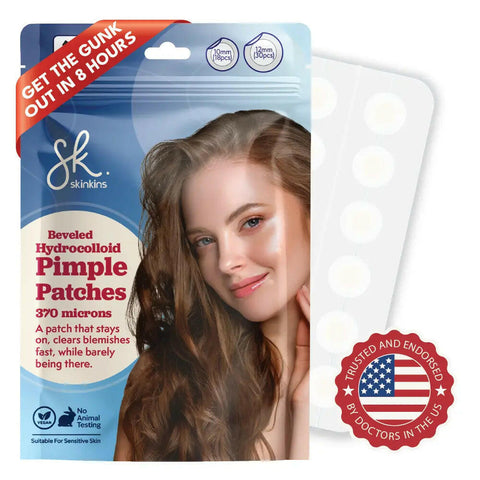
Look Clearer, Faster - Our blemish patches for face work to visibly shrink pimples. A great hydrocolloid patch for faster recovery without irritation.
Why picking creates deeper scarring
Squeezing doesn't just push contents out. Dermatology specialists explain that the follicle ruptures and bacteria spills into your skin when you apply pressure, which pushes inflammation deeper into the dermal layer. That deeper inflammation and trauma increases your risk for permanent pitted scars and dark spots, because the body can't rebuild enough collagen when damage is severe.
The other two accelerators
Unprotected sun and inconsistent SPF: UV exposure on healing red or brown marks triggers more pigment production and keeps post-inflammatory erythema redder longer. Skipping SPF on cloudy days or failing to reapply during long outdoor time does the same work as direct sun.
Over-exfoliating inflamed skin: Using rough physical scrubs, daily strong acids, or picking at flakes on active breakouts tears at an already compromised barrier. That added friction spreads bacteria and prolongs inflammation, which makes both pigment and pitting more likely.
How to physically block the picking habit
Willpower alone rarely works in front of a bathroom mirror. Covering an active, oozing blemish with a hydrocolloid dressing gives you a physical barrier that absorbs oils and pus while blocking touching and picking, and it helps protect the area from external bacteria and irritation caused by touching. The patch turns white as it absorbs fluid, which discourages further squeezing, and it keeps the wound moist so it heals cleaner.
This is prevention, not scar removal. Ultra-thin hydrocolloid patches like the ones from SKIN KINS don't dissolve existing scar tissue. They stop new trauma from forming while old marks fade.
Stopping picking is the single most effective, zero-cost intervention you have, more useful for preventing new scars than any topical remedy.
Use this quick log for one week to spot your patterns:
| Field / Step | What to Enter | Example |
|---|---|---|
| Picking urge moment | Time, location, and replacement action | 9:20pm bathroom mirror, urge to squeeze chin whitehead - applied hydrocolloid patch instead |
| Morning SPF | Product, SPF number, time applied | CeraVe AM SPF 50, applied 7:30am before commute |
| Midday sun check | Minutes outside + reapply yes/no | 45-min lunch walk 12:15pm, reapplied at 12:40pm |
| Exfoliation | Product and frequency | 2% salicylic acid, Monday and Thursday only, no scrub |
| Evening cover | Which active spots you covered overnight | Thin patch on lower cheek blemish 10:30pm to 7am |
When Natural Care Isn't Enough: Signs You Need a Dermatologist
Most marks respond to consistent natural care, but a subset genuinely won't: the American Academy of Dermatology advises that acne scarring that stays clearly pitted, becomes raised and firm, or shows no fading after 3+ months of consistent at-home care should be evaluated by a board-certified dermatologist instead of continued natural care alone.
Seek professional input if you notice any of these patterns:
- Texture you can feel. Scars that are visibly indented, pitted, or create shadowed holes when light hits from the side indicate tissue loss. The AAD describes these as depressed or sunken scars that most people develop, and topical fading routines alone won't rebuild that structure.
- No change after a full cycle. Flat red or brown marks that look the same after 3+ months of daily SPF and a consistent fading routine have likely plateaued.
- Raised, growing, or itchy scars. Marks that thicken, rise above skin level, itch, or extend beyond the original blemish border suggest a hypertrophic or keloid response that needs medical oversight.
- New scars outpacing old ones. If active acne is still creating fresh lesions weekly, you are fighting new damage faster than old marks can fade.
A dermatologist doesn't start with one single fix. According to the AAD, board-certified dermatologists develop an individualized treatment plan for acne scars, often combining approaches. Depending on your scar pattern, they may discuss chemical peels, microneedling, laser resurfacing, or cortisone injections for raised keloid-type scars, options that target deeper collagen remodeling, not just surface discoloration.
Your action plan is simple: identify whether you have marks, pits, or raised scars, match the evidence-based at-home routine to that type, remove the habit of picking, and put a 3-month check-in on your calendar. If that checkpoint shows pitting, raised growth, or no fading at all, book the dermatology consult.
Sources
- Acne scars: Overview
- www.verywellhealth.com
- nationaldermatologyauthority.com
- Acne Scars vs Hyperpigmentation: Which Is It?
- A Double-Blind, Randomized Clinical Trial of Niacinamide 4% versus Hydroquinone 4% in the Treatment of Melasma
- www.goodrx.com
- www.jaad.org
- 5 Reasons Why You Shouldn’t Pick at Your Acne
- Hydrocolloid dressing
- Acne scars: Consultation and treatment
Frequently Asked Questions
How do I know if my dark spot is actually a scar or just color?
Use touch and light. If skin feels flat and color does not cast shadow, it is pigment or vascular mark. A scar changes texture and is felt as a dip or bump, which is the distinction defined as An acne scar changes texture, hyperpigmentation changes color only.
My red spots vanish when I press a clear glass on them and come right back. Is that scarring?
That blanching suggests post-inflammatory erythema, not pigment, because you are briefly emptying dilated capillaries. PIE tends to respond to soothing barrier support, SPF, and time, rather than pigment-targeting ingredients. If redness persists past 3 months, get it checked.
I have both brown spots and indented pits in the same area. Which should I treat first?
Prioritize stopping new breakouts and protecting existing flat marks with SPF, since pigment care can run in parallel with professional evaluation for pits. True atrophic pits rarely go away completely on their own and do not fill from topicals alone, so plan a dermatology consult for texture while you fade color at home.
Can I use hydrocolloid pimple patches to fade old acne pits?
No, they are prevention tools, not remodeling treatments. They absorb oils and pus and protect from external bacteria and touching, which lowers risk of new scars, but they do not rebuild lost collagen.
How long should I stick with natural fading before booking a dermatologist?
Give flat marks a consistent routine with daily SPF and a proven brightener for at least 3 months and track changes weekly. If after that you see no fading, feel clear indents or raised tissue, or notice marks growing beyond original borders, book a board-certified dermatologist who will develop an individualized treatment plan.
Do at-home dermarollers help ice-pick or boxcar scars heal faster naturally?
No, and they add risk. Dermatology guidance advises microneedling be done in a medical setting due to infection and scarring risk, so DIY rollers can worsen pits. For atrophic scars, prescription retinoids have stronger evidence for collagen support over months than any home needle device.
Are silicone sheets useful for indented scars or only for raised ones?
Evidence and AAD guidance point to silicone for hypertrophic and keloid raised scars, where the AAD recommends silicone sheets or gel. For depressed boxcar or rolling scars, silicone does not fill tissue loss, and you will need professional options that target deeper remodeling.
Why does squeezing a pimple make scarring more likely?
Pressure can make the follicle rupture and bacteria spill into your skin, driving inflammation deeper. That trauma increases your risk for scars because collagen repair cannot keep up when injury extends into the dermis.