The article defines what makes a pimple patch safe for sensitive skin, then compares Peach Slices, Neutrogena, Hero Cosmetics, PanOxyl and SKIN KINS on formulation purity, thickness and adhesive. It explains why pure hydrocolloid outperforms medicated and microdart options, details common application mistakes that trigger irritation, and matches patches to sensitivity profiles, concluding SKIN KINS balances invisibility and gentleness while Peach Slices offers size range and Hero offers grip.
- Pure hydrocolloid pimple patches draw out fluid and seal the blemish while it heals with no active drugs, no acids, and no fragrance.
- For sensitive skin, simple hydrocolloid is recommended because patches with salicylic acid may irritate and tea tree oil can be very drying under occlusion.
- Medical-grade hydrocolloid forms a gel-like protective layer that absorbs exudate, supports a moist environment, and promotes keratinocyte migration for calmer healing.
- Gentle removal means stretching the patch slowly along the skin, not pulling upward, and applying on clean, dry skin with no actives underneath.
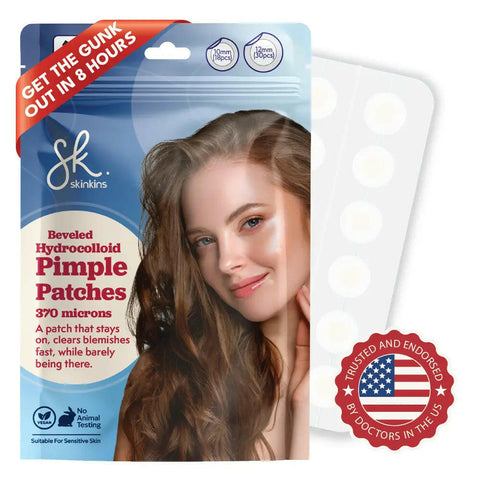
- Ultra-thin patches at 370 microns or 0.37mm offer nearly invisible daytime wear, while size options of 7, 10, and 12mm help match the dot to the whitehead.
What Makes a Pimple Patch Safe for Sensitive Skin
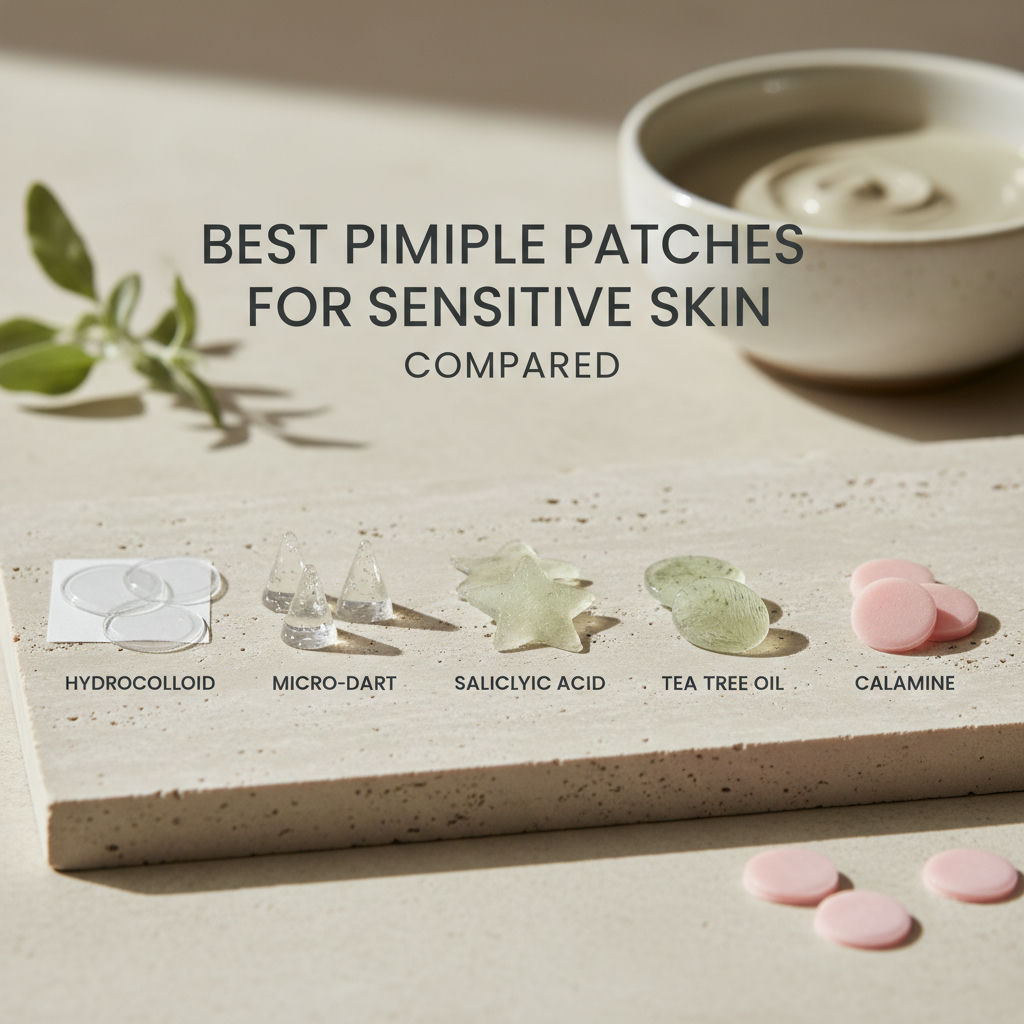
The best pimple patches for sensitive skin are pure, non-medicated hydrocolloid patches with no fragrance, alcohol, dyes, or high-percentage actives like salicylic acid or tea tree oil, held on by a gentle low-tack adhesive that lifts without pulling. Options like SKIN KINS, Peach Slices, and Neutrogena's sensitive-skin line all build around that same formula, while medicated or microdart patches add chemical or physical penetration that reactive skin tends to punish.
The trade-off that trips up sensitive skin is mechanism. Pure hydrocolloid works physically, not chemically: it is a thin dressing that sticks over a blemish, draws out fluid, and seals the area while it heals, with no active drugs, no acids, no fragrance and no scrubbing involved. Medicated patches do the opposite. They drive ingredients into the pore to unclog and kill bacteria, which is effective for some spots but adds chemical load your barrier has to tolerate.
For reactive types that turns into stinging and dryness. Patches containing salicylic acid may irritate dryer, sensitive skin, and tea tree oil can be very drying, which is why both are common triggers on already-inflamed skin.
Microdart patches raise the stakes further by using tiny spikes to push actives deeper. For a surface whitehead that only needs absorption, that extra penetration means more chance of inflammation without added benefit.
So vet the label like any leave-on for reactive skin: fragrance-free, alcohol-free, no added salicylic acid, benzoyl peroxide, or essential oils, and look for a silicone or hydrogel adhesive designed to stay put without causing irritation on removal.
Peach Slices, Neutrogena, Hero Cosmetics, PanOxyl, and SKIN KINS Side by Side
Peach Slices Acne Spot Dots, Neutrogena Sensitive Skin Acne Patches, Hero Cosmetics Mighty Patch Original, PanOxyl Overnight Spot Patches, and SKIN KINS pimple patches all compete on the same sensitive-skin promise: pure hydrocolloid with no fragrance, no alcohol, and no active ingredients to irritate reactive skin. Where they differ is formulation purity, thickness, and stick. The table below lines them up on the same checks so you can see tradeoffs without marketing translation. (Wear-time claims vary by brand and aren't consistently documented across all five, so treat the column below as sourced examples rather than a complete chart.)
| Product | Formulation (fragrance/alcohol/active-free?) | Wear time | Thickness / invisibility under makeup | Adhesive strength |
|---|---|---|---|---|
| Peach Slices Acne Spot Dots | medical-grade hydrocolloid, fragrance-free, alcohol-free, hypoallergenic, no actives | overnight / up to 8 hours (brand) | thin but visible dome, 3 sizes 7/10/12mm | low-tack, repositionable |
| Neutrogena Sensitive Skin Acne Patches | hydrocolloid, fragrance-free, active-free | — | thicker opaque dot, less invisible | gentle low-tack |
| Hero Cosmetics Mighty Patch Original | medical-grade hydrocolloid, drug-free, fragrance-free, active-free | — | thick nighttime profile, not makeup-invisible | strong overnight hold |
| PanOxyl Overnight Spot Patches | hydrocolloid, fragrance-free, active-free | overnight | medium thickness, visible edge | moderate hold |
| SKIN KINS pimple patches | plant-based hypoallergenic hydrocolloid, fragrance-free, alcohol-free, no harsh actives | designed to draw out gunk with continuous overnight wear | ultra-thin, nearly invisible under makeup | secure but gentle, picking-prevention |
Peach Slices Acne Spot Dots give you options. Selling as medical-grade hydrocolloid in 3 sizes (7, 10, and 12mm, 30 ct) and listed as fragrance-free, alcohol-free, hypoallergenic, and silicone-free, they cover whiteheads of different sizes. Tradeoff: the dome is a bit thicker than daytime-thin patches, so it is more visible under foundation.
Neutrogena Sensitive Skin Acne Patches lean into name recognition for sensitive skin with a fragrance-free, non-medicated hydrocolloid design. Tradeoff: opaque and slightly raised profile that reads as a dot in daylight, and typically sold in a single size with fewer patches per box than value packs.
Hero Cosmetics Mighty Patch Original is the overnight workhorse, made with medical-grade hydrocolloid and described as drug-free, derm-tested, and suitable for sensitive skin, with strong staying power through the night. Tradeoff: thicker construction that secures overnight but is not designed to disappear under makeup.
PanOxyl Overnight Spot Patches focus on overnight treatment with a plain hydrocolloid approach without fragrance or actives. Tradeoff: limited size range and a more noticeable edge, which makes daytime wear harder to hide.
SKIN KINS pimple patches were built for the gap the others leave: an ultra-thin, nearly invisible profile that sits flat under makeup, plus a plant-based, hypoallergenic hydrocolloid that protects from picking while shrinking the look of blemishes. Tradeoff: positioned as a premium, ingredient-clean option rather than a bulk drugstore value pack, so price per patch trends higher than mass-market boxes. Learn how thickness affects coverage in this hydrocolloid pimple patches guide.
Verdict: For reactive skin that also needs to stay invisible under makeup, SKIN KINS best balances a clean, fragrance- and alcohol-free hydrocolloid with ultra-thin wear, while Peach Slices wins on size variety and Hero wins on overnight grip.
Why Hydrocolloid Beats Medicated and Microdart Patches on Reactive Skin
For reactive, sensitive skin, hydrocolloid patches work by pulling fluid out, creating a moist, protected healing environment without penetrating or chemically challenging the barrier, the opposite of what medicated or microdart patches do.
The reason pure hydrocolloid consistently wins for this skin type comes down to wound-care physics, not marketing. A narrative review of hydrocolloid use in dermatology describes how hydrocolloid dressings form a gel-like protective layer upon contact with water, absorbing exudate and maintaining moisture that promotes healing. The polymers are hydrophilic and colloidal, so they swell into a soft gel that traps sebum and inflammatory fluid while the outer film shields the lesion from friction, picking, and outside bacteria. That moist environment supports autolytic debridement and the migration of keratinocytes across the wound surface, so the pimple flattens because pressure and fluid are removed, not because a drug was pushed in.
Medicated patches invert that logic. Salicylic acid, benzoyl peroxide, tea tree oil and other spot-treatment actives are added specifically to penetrate the follicle to exfoliate or kill Cutibacterium acnes. On a compromised barrier, penetration is the problem. Topical benzoyl peroxide and salicylic acid are associated with allergic contact dermatitis, dryness, erythema, burning, itching and peeling, and allergic contact dermatitis to benzoyl peroxide has been documented since 1984, sometimes presenting as intense facial edema and pruritus that mimics a more severe reaction. Occluding those actives under an adhesive patch increases contact time and concentration, which raises the chance of stinging and delayed redness even if you tolerated the same ingredient in a rinse-off cleanser.
Microdart or microneedle patches raise the stakes further by physically puncturing stratum corneum with dissolving points to deposit actives below the surface. For resilient skin that can be an effective delivery trick, but for thin, reactive skin it creates micro-channels through a barrier that is already struggling to stay intact, inviting irritation from both the puncture itself and the dissolving matrix.
That is why plain hydrocolloid remains the lowest-risk mechanism for exudative whiteheads on sensitive skin: it does not deliver, it draws. If you want a realistic sense of how quickly pimples actually flatten overnight, think fluid removal first, actives second.
Application Mistakes That Trigger Irritation Even With Gentle Patches
Even the gentlest hydrocolloid patch for sensitive skin can still cause redness, stinging, or a white ring when you trap retinoids underneath, rip the dot straight up, or leave a saturated patch on well past its absorption point. Hydrocolloid itself is inert, which is why the real risk usually comes from usage errors that undo even the gentlest formulation's benefit.
1. Applying over serums, acids, or retinoids. A patch is occlusive. Dermatologists warn to avoid placing them on top of skin products that contain other active ingredients because the seal drives potency deeper and increases irritation risk. Neutrogena's directions say to avoid using other products before applying and to apply on clean, dry skin.
2. Ripping upward instead of stretch-peeling. Pulling up lifts surface skin cells with the adhesive. The correct method on sensitive-skin patches is stretching it along the skin slowly and not pulling upward, parallel to the face.
3. Using a dot that is too large. When the adhesive sits on healthy skin instead of just the blemish head, you expand friction and occlusion. Match the dot size to the whitehead, not to the red zone around it.
4. Wearing past the white. A dot that has turned fully white has finished absorbing. Neutrogena notes to leave each patch on until it visibly turns white and to check periodically rather than removing too early, since that color change signals the patch has absorbed fluid. Leaving it on well past that point does not add benefit and can lead to irritation or clogged pores around the area.
The safest way to track these failure points:
| Mistake point | What to do instead | Real example from a routine |
|---|---|---|
| What was under the patch | List actives applied in last 12 hours | Tretinoin 0.025% applied night before on chin |
| Skin prep before patch | Cleanse, fully dry, no product | CeraVe Foaming Cleanser, pat dry 60 seconds, no moisturizer before dot |
| Removal technique | Stretch-peel parallel to skin | Loosen edge, stretch slowly along cheek for 10 seconds, no upward pull |
| Wear time and end signal | Note time on and white change | On at 10:30pm, off at 6:30am, dot white at center, replace only if still draining |
Even a 100% hydrocolloid patch can irritate sensitive skin if you apply it over retinoids, heavy moisturizers, or makeup, or remove it by pulling straight up instead of stretching along the skin.
Matching a Patch to Your Sensitivity Profile
Matching a pimple patch to your sensitivity profile starts with choosing pure hydrocolloid, free of fragrance, dyes, or penetrating actives, and wearing it long enough to draw out fluid without stripping your barrier. Dermatologists point to that single filter, 100% hydrocolloid and zero chemical additives, first for reactive skin, since patches with salicylic acid or tea tree oil can be more irritating.
Look Clearer, Faster - Our blemish patches for face work to visibly shrink pimples. A great hydrocolloid patch for faster recovery without irritation.
Once you've fixed the application traps that cause redness on their own, your decision comes down to which sensitivity you live with most.
If fragrance, dye or preservative reactivity drives your flare-ups
Prioritize the shortest ingredient list you can find. Look for labels that state plain hydrocolloid, no added fragrance or colorants, and plant-based hypoallergenic construction. SKIN KINS lists that exact combination for sensitive skin and leaves out color additives.
If you need daytime coverage under makeup
Thinness beats tack. Patches measured at 370 microns, or 0.37mm, sit flat enough to disappear under foundation without a visible dome, while still creating an occlusive seal that visibly shrinks the blemish. In the comparison, SKIN KINS and Peach Slices are the thin-profile options that hold that balance of invisibility and beveled-edge grip.
If your barrier is compromised or eczema-adjacent
Skip microdart and high-strength medicated patches completely. Stick to plain hydrocolloid for overnight wear, on clean dry skin with no retinoids or exfoliating acids trapped underneath.
If your spots are larger or cystic
Size matters more than strength. Choose a brand that offers 10mm and 12mm options, or a multi-size assortment, so the patch fully covers the lesion without stretching edge skin.
When sensitive skin is the primary constraint, formulation purity wins every time. Active-ingredient strength looks tempting for speed, but a clean, low-tack hydrocolloid that protects and absorbs does more for calm, clear skin than any added acid.
Sources
- Pimple Patches for Sensitive Skin: Are They Safe?
- Pimple Patches and What They Offer
- Peach Slices Acne Spot Dots - Acne Patches | Peach & Lily
- www.ulta.com
- Mighty Patch™ Original Pimple Patch
- Narrative Review of the Use of Hydrocolloids in Dermatology: Applications and Benefits
- Allergic contact dermatitis to benzoyl peroxide mimics anaphylactic reaction
- www.drugs.com
- Neutrogena® Sensitive Skin Blemish Patches, 30 Count
- 5 Pimple Patch Mistakes to Avoid
- Tested and reviewed: the 15 best pimple patches for treating your next breakout
- Ultra-Thin Hydrocolloid Pimple Patches | Skin Kins
Frequently Asked Questions
Can I use a pimple patch if the skin around the blemish is already dry or flaking from retinoids?
Avoid applying directly over dry, flaking skin, especially if you used a retinoid or acid in the last 12 hours. Dermatologists advise to avoid placing them on top of skin products that contain other active ingredients because occlusion drives potency deeper and raises irritation risk. If your barrier is compromised, let flaking calm, cleanse, and only apply on fully dry bare skin.
Should I wash off moisturizer or sunscreen before putting a patch on?
Yes. Cleanse and pat completely dry, then apply the patch with nothing underneath for best adhesion and lowest irritation risk. Neutrogena's sensitive skin directions note to avoid using other products before applying and to apply on clean, dry skin.
How do I remove a patch without leaving a red ring?
Do not pull straight up. Carefully loosen one end of the patch by stretching it along the skin slowly, parallel to the face, which lifts adhesive without pulling surface cells. If a faint pink ring remains, give the area a break before reapplying.
Will a hydrocolloid patch work on a deep cystic bump that hasn't come to a head?
Pure hydrocolloid works by drawing out fluid and sealing the area while it heals, so it helps most once fluid is near the surface. For deep cysts with no head, it will still protect from picking but may not flatten much. If you cover it, choose a larger diameter like 10mm or 12mm rather than stretching a small dot.
Can I cut a larger patch down to size for a small whitehead?
You can trim, but you lose the sealed beveled edge that keeps the dressing intact and low-tack. A pre-sized option such as a 7mm dot from a 7/10/12mm assortment keeps adhesive off healthy skin and reduces friction. If you must cut, cut cleanly and only apply to bare, dry skin.
What should I do if the patch turns white quickly but the bump still looks raised?
Patch starts to turn white after it absorbs fluid, which signals it has formed its gel layer and finished absorbing exudate. Replace with a fresh hydrocolloid dot only if fluid is still draining, otherwise let skin breathe. Leaving a saturated dot well beyond the six to eight hours window can lead to irritation or clogged pores around the area.
Are patches with tea tree oil or salicylic acid ever okay for sensitive skin types?
For reactive skin, simple hydrocolloid patches are ideal and dermatologists often advise to skip salicylic acid and tea tree oil. Patches containing salicylic acid may irritate dryer, sensitive skin and patches with tea tree oil can be very drying, especially under an occlusive seal. If you tolerate those actives, use them separately, not trapped under a patch.
How long is too long to leave a patch on, and what happens if I sleep past that?
Many dermatologists point to six to eight hours as the functional wear window, using the white color change as your cue to remove. Beyond eight hours can lead to irritation or even clogged pores around the area, especially on sensitive skin. Overnight wear is fine, just remove once white and saturated.